
Why Poor Financial Visibility Slows Business Expansion

Why Poor Financial Visibility Slows Business Expansion Growth Is Difficult When You Cannot Clearly See What Is Happening Inside the Business Many companies believe business expansion is primarily about increasing sales, entering new markets, or hiring more people. While those factors matter, they are rarely the reason expansion succeeds or fails. One of the biggest barriers to sustainable growth is often hidden inside the organisation itself: Poor financial visibility. When leadership lacks a clear understanding of financial performance, decision-making becomes slower, risks become harder to identify, and expansion plans become increasingly difficult to execute. For growing businesses, financial visibility is not just a finance function. It is a business growth requirement. For companies entering new markets, financial visibility should be considered early in the process of setting up a company in Sri Lanka, not after operations have already started. What Is Financial Visibility? Financial visibility refers to the ability to access accurate, timely, and meaningful financial information that supports decision-making. It allows business leaders to understand: Revenue performance Operating costs Profitability Cash flow position Financial risks Business trends Without this visibility, leaders are often forced to make strategic decisions based on assumptions rather than facts. And assumptions become expensive when a business starts scaling. Why Financial Visibility Matters During Business Expansion Expansion increases complexity. As organisations grow, they typically introduce: New employees New suppliers New customers New markets New operational processes Each of these creates additional financial activity. Without proper visibility, leadership teams struggle to understand whether growth is actually creating value or simply creating additional cost. This is why many businesses experience growth in revenue while simultaneously losing control of profitability. The problem is not expansion itself. The problem is expanding without visibility. The Hidden Cost of Poor Financial Visibility Many businesses only recognise financial visibility problems after they begin affecting performance. The warning signs often include: Delayed financial reporting Unclear profitability Unexpected cash flow issues Budget overruns Poor forecasting accuracy Slow strategic decision-making Individually, these issues may seem manageable. Together, they create operational friction that slows growth and increases risk. In many cases, businesses do not lack financial data. They lack the systems and processes needed to turn that data into useful insights. Why Growing Companies Often Lose Financial Visibility As businesses become larger, financial management naturally becomes more complex. Information starts flowing from multiple departments, teams, and locations. This creates challenges such as: Disconnected reporting systems Inconsistent financial processes Delayed information sharing Limited operational oversight Poor cross-functional visibility What once worked for a small business often becomes inadequate for a growing organisation. The systems that supported ten employees may struggle to support fifty. The processes that worked in one location may not work across multiple locations. Without adaptation, visibility declines as growth increases. Financial Visibility Is About More Than Accounting Many business leaders associate financial visibility solely with accounting. That is a mistake. Financial visibility influences nearly every area of the organisation. It affects: Operational planning Resource allocation Hiring decisions Investment decisions Risk management Business strategy Strong financial visibility helps leadership teams understand not only what has happened, but also what is likely to happen next. This allows businesses to act proactively rather than reactively. Why Poor Financial Visibility Slows Decision-Making Every expansion decision carries financial implications. Questions such as: Should we hire additional employees? Can we enter a new market? Is this operation profitable? Can we increase investment? Are costs growing faster than revenue? all depend on accurate financial information. When leadership lacks confidence in the data, decisions become slower. More time is spent validating information. More resources are spent correcting reporting issues. More opportunities are missed while waiting for clarity. The result is slower growth and reduced organisational agility. The Link Between Financial Visibility and Operational Control One of the most overlooked aspects of business expansion is operational control. As organisations grow, maintaining visibility across multiple teams, departments, and locations becomes increasingly difficult. This is why many businesses focus on strengthening governance and operational oversight before scaling. As discussed in our article on strengthening financial controls before launching operations, stronger reporting systems give leadership better visibility before small problems become expensive. Without visibility, control becomes difficult. Without control, growth becomes difficult. Why Foreign Companies Need Strong Financial Visibility in Sri Lanka For foreign companies operating in Sri Lanka, financial visibility becomes even more important. Managing operations across different countries creates additional challenges, including: Distance from local teams Multiple reporting requirements Regulatory compliance obligations Cross-border financial management Operational oversight challenges Without structured financial reporting and governance processes, leadership teams can lose visibility into local performance very quickly. For overseas leadership teams, this becomes even more important when managing Sri Lankan operations remotely, because distance makes weak reporting harder to identify and operational problems harder to resolve. The further leadership sits from day-to-day operations, the greater the need for reliable financial and operational visibility. How Better Financial Visibility Supports Business Growth Businesses with strong financial visibility are often able to: Make faster decisions Allocate resources more effectively Improve profitability Strengthen forecasting accuracy Reduce financial risk Scale with greater confidence Most importantly, they can identify issues early before they become major operational challenges. This creates a more resilient and scalable business model. The Role of Financial Control Systems Strong financial visibility does not happen by accident. It requires structured financial control systems. These systems help businesses: Standardise reporting Improve financial accuracy Monitor performance Strengthen governance Support compliance Increase transparency The objective is not simply producing reports. The objective is creating information that leadership can trust. When businesses invest in financial control systems early, they create a stronger foundation for expansion and long-term scalability. Why Visibility Matters for Extended Office Operations As businesses expand into new markets, maintaining visibility becomes increasingly challenging. This is one reason why many companies evaluate the real ROI of an extended office, especially when they need operational visibility without building large internal structures from day one. A properly structured operational model provides leadership with better oversight, stronger governance, and more reliable reporting while supporting business growth. For many expanding organisations, visibility becomes one of the most valuable business assets. Growth Without Visibility Is a Risk Many organisations focus heavily on growth metrics. Revenue. Headcount. Market expansion. New opportunities. However, growth without visibility often creates hidden operational risks. A business can grow quickly while simultaneously losing control of
BOI vs Standard Company in Sri Lanka, What Foreign Investors Need to Know
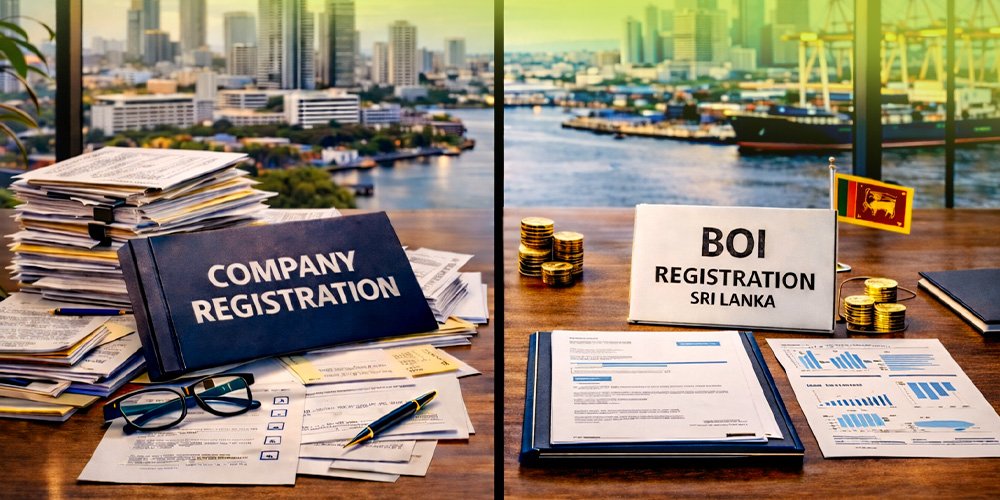
BOI vs Standard Company in Sri Lanka, What Foreign Investors Need to Know If you are a foreign investor entering Sri Lanka, one of the first decisions you will face is: Should you register under BOI or set up a standard company? This is not just a legal step. It directly affects: Your tax exposure Your setup speed Your operational flexibility Many investors assume BOI is automatically better. That assumption leads to poor decisions. Before making a decision, it is worth understanding how businesses actually enter the market. A clear breakdown of this can be found in this guide on setting up a company in Sri Lanka, which outlines the real process beyond registration. What Is BOI in Sri Lanka? BOI refers to the Board of Investment of Sri Lanka. It is a government authority that promotes foreign investment by offering targeted incentives. Key BOI Benefits: Potential tax incentives (depending on eligibility) Duty exemptions on certain imports Structured support for large or strategic projects However, these benefits are not guaranteed. You only receive them if your business: Meets specific investment thresholds Operates within approved sectors Complies with BOI conditions For companies planning long-term operations, the structure must also align with financial discipline. This becomes clearer when you look at how financial controls should be set before launching operations in Sri Lanka. What Is a Standard Company in Sri Lanka? A standard company is registered through the Registrar of Companies Sri Lanka under standard commercial law. Key Features: Fast and straightforward setup No sector restrictions Full operational flexibility Standard corporate tax rates This structure is often preferred by companies building operational offices, especially those prioritising control and scalability over conditional incentives. BOI vs Standard Company Sri Lanka: Key Differences Factor BOI Company Standard Company Setup Time Slower Faster Tax Incentives Available (conditional) Not available Flexibility Limited by agreement High Compliance Higher Standard Approval Required Yes No Best Fit Large investments Flexible operations What Is the Difference Between BOI and Standard Companies in Sri Lanka? Here is the direct answer: A BOI company operates under a special agreement with the government and may receive tax incentives but must follow strict conditions. A standard company operates under standard law with no special incentives, but complete flexibility. The real difference is simple: BOI gives potential advantages with restrictions. Standard companies give control without incentives. BOI Registration in Sri Lanka, Who Should Actually Consider It? BOI is not for everyone. You should consider BOI if: You are investing significant capital You are entering manufacturing, export, or large-scale operations You want long-term structured incentives You should avoid BOI if: You are testing the market You are setting up a small or mid-scale operation Your business depends on flexibility and speed Many modern businesses entering Sri Lanka focus more on efficiency and measurable outcomes. This is why understanding the real ROI of an extended office model becomes important when evaluating your structure. How Long Does It Take to Register a Company in Sri Lanka? This is one of the most searched questions by foreign investors. Standard Company: Typically 1 to 3 weeks Faster approvals Minimal dependencies BOI Company: Can take several weeks to months Requires proposal reviews and approvals Subject to compliance checks If speed to market matters, this difference alone can influence your decision. What Are the Ongoing Compliance Requirements? This is where most investors underestimate the impact. BOI Company: Must meet agreed investment conditions Regular reporting to BOI Compliance tied to incentive eligibility Standard Company: Annual filings Tax compliance under standard regulations Fewer operational restrictions If your business is lean, high compliance can slow execution more than it adds value. Tax Incentives in Sri Lanka, What Foreign Investors Often Miss Everyone talks about tax savings. Almost no one talks about eligibility risk. Under BOI: Incentives are conditional, not guaranteed You must maintain compliance to retain benefits Failing conditions can remove incentives Under Standard Company: You pay standard tax But you gain predictability and control In many cases, predictable financial structures outperform uncertain incentives over the long term. Can Foreigners Own 100% of a Company in Sri Lanka? Yes, in most sectors. Foreign investors can fully own both: BOI companies Standard companies However, sector-specific restrictions may apply depending on the industry. BOI vs Standard Company, Which One Is More Cost Effective? This is another high-intent question. At first glance: BOI looks cheaper due to tax incentives But in reality: BOI may include higher compliance costs Delays can increase operational expenses Restrictions can limit business efficiency A standard company may appear more expensive on paper, but often delivers better operational efficiency and faster returns. Why Most Colombo-Based Businesses Choose Standard Registration In practice, many companies operating in Colombo prefer standard structures. Why? Faster hiring and onboarding No dependency on approvals Better suited for service-based operations Easier day-to-day management This reflects a shift towards control, governance, and scalability, rather than purely tax-driven decisions. The Common Mistake Foreign Investors Make They optimise for tax first, instead of structure first. This leads to: Choosing BOI without eligibility Increased administrative burden Slower business operations Limited flexibility A better approach is to align your structure with how you plan to operate. How to Decide the Right Option Ask yourself: Do I qualify for meaningful BOI incentives? Is my investment large enough to justify BOI? Do I need flexibility or structured oversight? Can I handle additional compliance requirements? If you cannot clearly justify BOI, it is not the right choice. This is not just a registration decision. It is a strategic decision that defines how your business operates, scales, and manages risk in Sri Lanka. Choosing BOI without alignment creates friction. Ignoring it when relevant means missing real advantages. If you get this decision wrong, you do not just lose tax benefits. You lock your business into a structure that slows growth, increases compliance pressure, and limits control. Most foreign companies realise this too late, after setup. Do not make that mistake. If you are planning to enter Sri Lanka, get your structure right before you register. Talk to Envoy Ortus Plus and build a setup that gives you control, compliance clarity, and long-term scalability, not just short-term assumptions. 👉 Start your consultation today
How Much Does It Really Cost to Hire in Sri Lanka? EPF, ETF and Hidden Employer Costs

How Much Does It Really Cost to Hire in Sri Lanka EPF, ETF and Hidden Employer Costs Most foreign companies don’t misjudge salaries. They misjudge everything around them. Sri Lanka continues to position itself as a strong destination for global talent. A skilled workforce, competitive salary benchmarks, and a favourable operating environment make it an attractive market for expansion. On the surface, the case for hiring is straightforward. But in practice, a consistent pattern emerges. The cost of hiring is often underestimated. Not because organisations misunderstand salary levels, but because they do not fully account for what sits behind employment, statutory obligations, compliance requirements, and the operational structure needed to support them. For many companies entering the market, this gap becomes visible only after operations begin, particularly when expansion decisions are made without a clear understanding of the regulatory landscape. This is a recurring theme when looking at entering and operating in Sri Lanka as a foreign company Hiring vs Operating in Sri Lanka: What Companies Often Miss When organisations plan hiring in Sri Lanka, the focus is typically on talent availability, salary positioning, and speed of onboarding. The complexity begins once hiring moves into execution. Employment in Sri Lanka operates within a defined statutory framework that requires consistency, accuracy, and ongoing oversight. It is not something that can be simplified or adjusted based on internal preferences. This is where the gap between planning and execution becomes visible, especially in cross-border hiring environments where structure is not clearly defined. These challenges often appear in managing offshore teams and remote workforce structures in Sri Lanka Mandatory Employer Contributions in Sri Lanka (EPF and ETF Explained) Every formal employment structure in Sri Lanka includes statutory contributions that are legally required. These are not optional or situational. They are embedded into the employment system itself. Employees’ Provident Fund (EPF) Employees’ Trust Fund (ETF) From an employer’s perspective: EPF requires a 12% contribution ETF requires a 3% contribution This results in a 15% increase on top of salary from the outset. What is often underestimated is not the percentage itself, but the discipline required to calculate, report, and settle these contributions accurately every month. Common Payroll and Compliance Mistakes in Sri Lanka Hiring Understanding EPF and ETF at a high level is rarely the issue. The challenge lies in execution. In practice, issues tend to appear in areas that are not immediately visible during the early stages of hiring: Contributions calculated on incorrect earnings structures Delays in monthly payments due to weak coordination Fragmented ownership between HR and finance Limited visibility into whether compliance is being maintained These issues rarely create immediate disruption. Instead, they accumulate gradually, often remaining unnoticed until they reach a point where correction becomes complex and costly. What Happens When You Scale Hiring in Sri Lanka Without Structure At a small scale, these gaps are often manageable. With a limited number of employees, inconsistencies in payroll or compliance may not have a significant immediate impact. However, as organisations grow, these same gaps begin to expand. Scaling introduces pressure on systems, processes, and accountability. What starts as a minor inconsistency can evolve into: Financial exposure through accumulated underpayments Increased likelihood of regulatory scrutiny Dependence on individuals rather than structured systems This is typically the stage where companies revisit their approach, especially when growth begins to expose structural weaknesses. This pattern is frequently seen in growth-stage operations expanding in Sri Lanka Why Hiring in Sri Lanka Requires More Than Recruitment Organisations that scale effectively in Sri Lanka approach hiring differently. They do not treat it as a standalone recruitment process. Instead, they recognise it as part of a broader operating model that connects multiple functions. This includes: Payroll and statutory compliance Financial oversight and reporting Governance and accountability structures Operational visibility across teams When these elements are aligned, hiring becomes sustainable. When they are not, growth introduces risk rather than value. How Foreign Companies Are Structuring Teams in Sri Lanka Today There is a clear shift in how global companies are approaching hiring in Sri Lanka. Rather than relying on fragmented outsourcing models, where responsibilities are distributed and visibility is limited, organisations are moving toward more integrated approaches. Often referred to as extended office structures, these models bring together hiring, payroll, compliance, and operational governance within a single framework. This allows organisations to maintain: Consistency in execution Visibility across functions Clear accountability Stability as teams scale The focus shifts from managing individual tasks to controlling the overall operating environment. What Is the Real Cost of Hiring in Sri Lanka? The question is no longer: “How much does it cost to hire in Sri Lanka?” It is: “Do we fully understand and control the total cost and structure of employment?” Because without that clarity: Costs are underestimated Compliance risks increase Operational control is reduced Is Hiring in Sri Lanka Still Cost-Effective? Sri Lanka remains a strong and competitive market for building global teams. However, like any operating environment, it requires structure. Salary is visible.Compliance is embedded.Control determines outcomes. Organisations that recognise this early build stable, scalable operations. Those that do not often encounter these challenges later, when correction becomes significantly more complex. How to Build a Compliant and Scalable Hiring Model in Sri Lanka For companies exploring Sri Lanka, the conversation is shifting. It is no longer just about accessing talent. It is about building a structure that supports that talent effectively. Understanding statutory contributions such as EPF and ETF is one part of the equation. Designing a system that ensures visibility, control, and consistency is what ultimately determines long-term success.